
Caspian Wire| The hijab ban and the crackdown that followed, journalist Aynur Elgunash’s health is critical | October 2026
In October, the hijab ban in Azerbaijan’s schools turned into a crackdown, while jailed journalists faced a health crisis and the European Parliament demanded the release of political prisoners.
The hijab ban and the arrests in Baku and in the regions
|
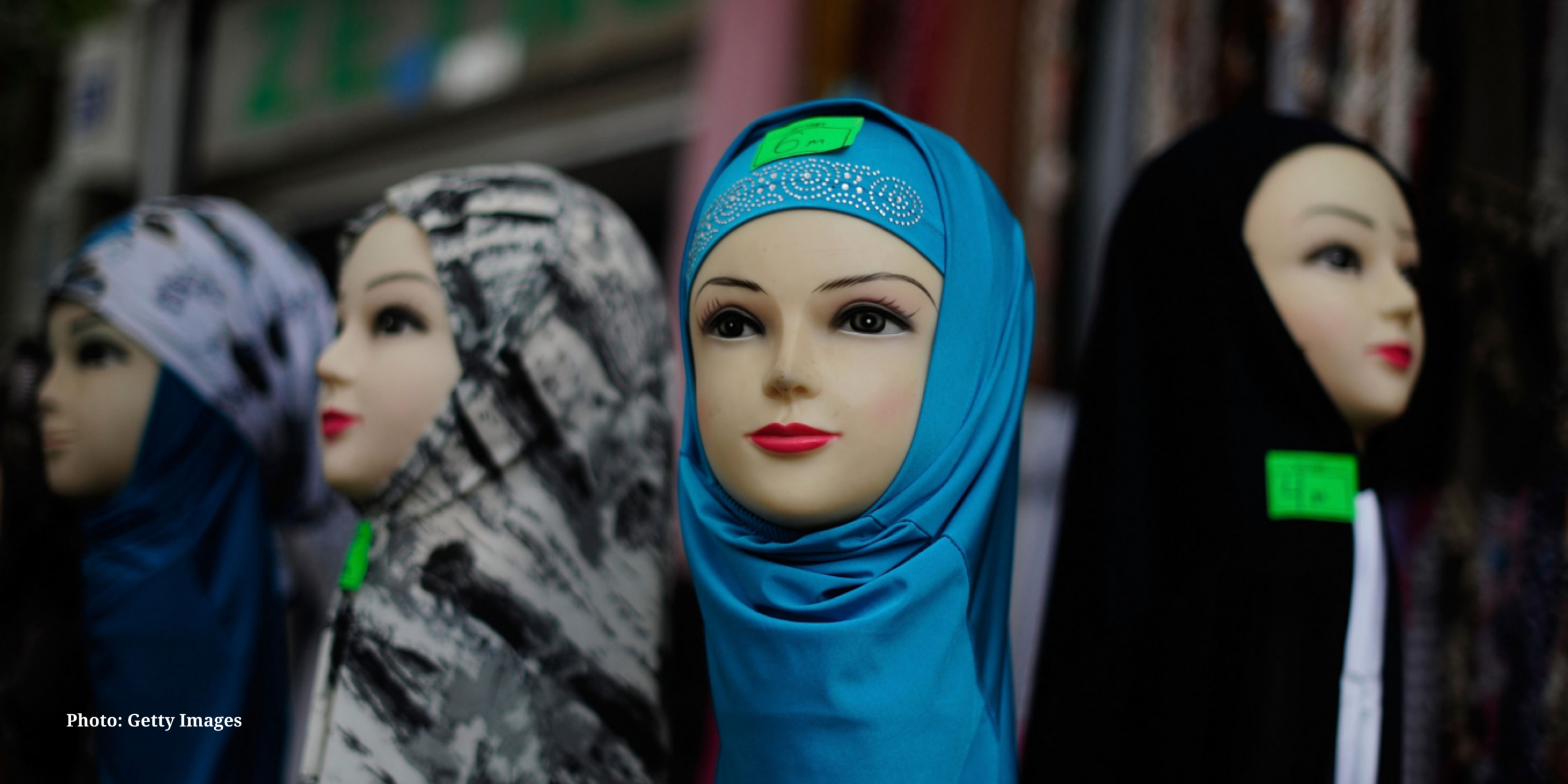
The Cabinet of Ministers resolutions of 21 September and 6 October barred pupils and teachers from wearing clothing “incompatible with the secular principle of education.” Neither names the headscarf, but from October schools began turning away girls and teachers who wore one. On 12 October, as videos of excluded girls spread, Instagram and TikTok stopped loading without a VPN. On 12 October, the Interior Ministry announced 37 arrests in Baku under Article 233 of the Criminal Code (gross violation of public order); media reports of more than 200 detentions near the 28 May metro station remain unconfirmed. Outside the capital, parents and residents received administrative jail terms, usually with no stated legal basis: 25 days for Nakhchivan taxi driver Gudrat Abdullayev over a TikTok video, and 25 days each for brothers Seymur and Samur Mammadov in Sharur after they objected to their children’s exclusion; 20 days for more than ten people in Jalilabad’s Privolnoye village; and 30 days each for Rafael Huseynzade, who wrote “Freedom for the hijab!” on a school fence in Absheron, and his father, Fuzuli Huseynov, who joined a picket. Activist Ilkin Huseynov launched “Let Leyli Go to School,” offering free lessons to excluded girls, on 13 October; he was taken from his home the next day and given 30 days for disobeying police. Popular Front member Matanat Turan was remanded for two months on 17 October after a prosecutor overturned her house arrest. On 16 October, Amnesty International called the exclusions discrimination and demanded the release of everyone held for peaceful protest. Jailed journalist Polad Aslanov began a hunger strike against the ban in early October, saying his own daughter had been denied schooling. His wife says that the same day, the head of Facility No. 15, Ramig Nasibov, and another officer beat him in Nasibov’s office before putting him in a punishment cell; he was moved to the prison medical facility on 15 October. His weight has fallen from 52 to 42 kilograms, doctors have warned he could fall into a coma, and his wife is not allowed to visit him. Cleric Zeynal Bayramov is also on hunger strike, and 19 prisoners at Facility No. 17 have threatened to join them. On 27 October, Human Rights Watch said that turning girls away from school over their headscarves violates their right to education and freedom of religion. It called for the release of everyone detained for peacefully protesting, access to lawyers for those in custody, and an investigation into the social media restrictions. It also cited activists’ reports that 88 people were detained in the village of Nardaran. Free Voices Collective Analysis: Our own analysis of the ban, its legal basis under Azerbaijan’s Constitution and the European Convention, and what it reveals about the limits of rights language, is published on our website: Azerbaijan’s Hijab Ban: Limits of Rights. |
Health crises and abuse in detention centres
Meydan TV editor-in-chief Aynur Elgunash, detained since 6 December 2024, has spent much of October in a medical crisis. Her family said on 10 October that a kidney stone first measured at 18 mm had damaged the organ, and that the prison ultrasound showed the kidney was “about to fail.” Her blood pressure fluctuates, her relatives say three ultrasound examinations returned the same diagnosis while her transfer was delayed so that “a doctor could check once more.” She was moved to the Penitentiary Service’s Medical Facility on 18 October. There, her lawyers say, doctors recommended an urgent surgery, and also found tumours in her chest. Elgunash has a Group II disability and a hip prosthesis, and has undergone 17 operations.
Her colleague Shamshad Agha, a defendant in the same case, was moved on 13 October to the Penitentiary Service’s Specialised Medical Facility No. 3, after what relatives described as serious health problems.
On 21 October, lawyer Zibeyda Sadigova published a list of seven jailed journalists, including Aynur Elgunash and Shamshad Agha and activists she says urgently need treatment they cannot get. She set this against the Ministry of Justice’s own figures. 64 people died in penitentiary institutions in the first half of 2026, against 85 in the same period of 2025 and 153 over that whole year, and asked whether any of them had been examined or treated in time. Those who need urgent medical treatment are:
- Alasgar Mammadli (a tumour),
- Ruslan Izzatli (gallbladder disease),
- Farid Ismayilov (liver and heart disease),
- Ulvi Hasanli (heart disease),
- Bahruz Samadov (self-harm and mental health).
Amnesty International warned on 26 October that Bahruz Samadov is at risk of torture. He has reportedly been held in solitary confinement in a high-security prison for two months and denied the medical care he needs.
Vugar Mammadov, editor-in-chief of the Hurriyyet newspaper and Hurriyyet TV, held since October 2025 on extortion charges he denies, is also seriously ill. At a hearing at the Baku Court on Grave Crimes on 14 October, his lawyer, Rovshana Rahimova, told the court he urgently needs heart surgery and that “his right leg barely works.” She asked for him to be moved to house arrest so he could get treatment, motion was rejected. Relatives had already described chest pain, kidney failure and a prostate tumour in August. The prosecution accuses him of extorting money from the Veyseloglu, Azerlotereya and Azersun companies.
Journalist Osman Rzayev, jailed in Sheki, wrote to the justice minister and prosecutor general that prisoners’ food is stolen, that inmates pay for phone calls, computers and family visits, and that drugs circulate freely. He says he has been put in punishment cells for complaining, and that he contracted hepatitis C after guards forcibly shaved him with unsterilised equipment.
Religious prisoner Parviz Musayev was taken from Facility No. 13 at night on 8 October. After a hunger strike over medical care, his family does not know where he is. Rovshan Jabbarov was reportedly tortured for refusing to pay a bribe inside prison, and his family has not been able to reach him since September.
Journalist Nurlan Libre told the court on 26 October that he was beaten in the detention centre chief’s office and put in a punishment cell, which he believes was retaliation for writing about the hijab. Former MP Nazim Baydamirli, denied medical tests and family video calls.
Trade unionist Sara Rahimova, who faces a fraud case and an exit ban, said a police officer repeatedly tried to touch her at a Baku police station. An investigator told her the case was “an order from above.” She kept silent for months so as not to distract from the political prisoners, and spoke out only after friends urged her to. The Workers’ Table’s chair, Afiaddin Mammadov, and member Mohyaddin Orujov remain in prison.
Ali Karimli’s case closes, journalists’ trials drag on
The investigation into Popular Front Party chair Ali Karimli and party secretary Mammad Ibrahim has closed with a charge of attempting to seize power by force, which carries a sentence of 12 to 20 years or life . Karimli, arrested in November 2025, says he has refused to testify. More party members were detained this month, including Anar Arkivan, who was taken from outside his home by plainclothes men on 6 October, his third detention this year. Narimanov branch member Elmaddin Muradov was given 30 days on 14 October and on 26 October, Layiq Rashidov, a boiler repairman, was lured out of a house where he was working and given 10 days over a Facebook post about the party’s jailed leaders.
The man whose case first ensnared Karimli fared very differently. On 22 October, former presidential chief of staff Ramiz Mehdiyev was convicted of treason, attempting to seize power, money laundering and bribery, and sentenced to 14 years, suspended because of his age (88) and health. His assets were confiscated.
In the Meydan TV case, the State Tax Service filed a 79,089 manat claim against the 12 defendants, calculated on grants, which defence lawyers say are tax-exempt. At the same hearing, journalist Ramin Deko said the €30,000 police claim to have found in his suitcase was planted. In the Toplum TV appeal, Ramil Babayev refuses to attend hearings “because there no courts in Azerbaijan,” and Farid Ismayilov called the appeals court a “kolkhoz” (Soviet collective farm).
Prosecutors asked for 12 years for meclis.info head Imran Aliyev and 11 years for activist Elgiz Gahraman. Aliyev says he is being punished for scrutinising parliament. The Supreme Court upheld Zamin Zakiyev‘s 7-year-3-month sentence in the NGO case. The trial of Azel TV editor Afgan Sadigov, deported from Georgia in April after the ECtHR had barred his extradition, opened in Lankaran on 23 October.
On 29 October, the Supreme Court cut the sentence of war veteran and activist Haji Valiyev, head of the Young Veterans union, from two and a half years to two. Valiyev, known for speaking out on the problems of veterans and families of fallen soldiers, was arrested in March 2025, days after publicising police violence against veterans working as street vendors in Baku. He was sentenced in May 2026 for hooliganism and damaging property, charges he links to his activism.
Jailed teacher and government critic Dayanat Chalabi announced he would go on hunger strike from 26 October in protest at what he calls violations by the court of Judge Mahira Karimova. He says the court rejects every defence motion despite its legal grounds and is preparing to convict him without evidence. Chalabi, charged with stabbing a man, was arrested in December 2025, a day after writing on Facebook that “the Aliyev family’s rule did not strengthen the country, it weakened it.”
Jailed economist Fazil Gasimov asked the Supreme Court to reopen his case. He says CCTV footage that the trial court never viewed shows Gubad Ibadoghlu handing the key witness nothing, and that he found four case documents on which the investigator had signed his name and his lawyer’s.
In the Azerbaijani Parliament
|
The Milli Majlis, whose autumn session opened on 30 September, held five sittings in October, and several of the bills on its agenda touch on civil rights. Amendments to the Criminal Code and the Criminal Procedure Code went through second reading on 16 October and were scheduled for third and final reading on 23 October. A separate package amending the Criminal Code and the Code of Administrative Offences was taken up in first reading on 30 October. The Law on Telecommunications is being amended at speed: the bill had its first reading on 27 October and its second only three days later, on 30 October, a fortnight after Instagram and TikTok were restricted during the hijab protests. On 13 October, deputies also considered amendments to the laws on the police, on operational search activity (the legal basis for surveillance) and on telecommunications, and on 27 October the Migration Code. The 30 October sitting also included a new law on free legal aid, a law on protecting whistleblowers who report corruption, changes to the laws on access to information, personal data and citizens’ appeals, and amendments to the Penal Enforcement Code and the law on lawyers. The texts of most of these amendments have not been published, and we will report on what they change. |
International pressure
|
On 2 October, more than 40 political prisoners appealed to foreign governments and international bodies to impose sanctions on the officials involved in their cases. At the Forum 2000 conference in Prague, Free Voices Collective and Forum 2000 presented an exhibition on women political prisoners from Azerbaijan and Georgia. It featured nine jailed Azerbaijani journalists— Aynur Elgunash, Ulviyya Ali, Fatima Movlamli, Khayala Aghayeva, Nargiz Absalamova, Sevinj Vagifgizi, Aytaj Tapdig, Aysel Umudova and Elnara Gasimova. Alongside them were Georgian journalist Mzia Amaglobeli, activist Nino Datashvili and opposition politician Elene Khoshtaria. |
EU-Azerbaijan relations
|
On 8 October, the European Parliament adopted a resolution, calling for the release of Ali Karimli and Anar Mammadli and Anar Abdullayev. It says Karimli’s access to food and drinking water has been restricted, his cell lacks ventilation, and he has fainted from sleep deprivation and dehydration. It urged targeted sanctions under the EU’s Global Human rights Sanctions Regime and said any future EU-Azerbaijan partnership agreement should depend on freeing political prisoners. Azerbaijan’s parliament rejected it as interference. President Aliyev had already set the tone on 2 October, telling his party that “no one should interfere in our affairs” and that Azerbaijan “joins no camp.” In Germany, Der Spiegel reported that prosecutors are examining possible contacts between August Hanning, a former head of the BND intelligence service arrested on suspicion of espionage, and an Azerbaijani intelligence officer. Baku called the reports disinformation. |
Russia-Azerbaijan relations
|
At Russian Energy Week, a SOCAR vice president said Azerbaijan wants to buy gas from Gazprom again. Its 2022-2024 imports of Russian gas had drawn accusations of relabelling Russian gas for Europe, and in 2026 the EU passed a law requiring proof that gas entering via Azerbaijan is not Russian. |