|
Caspian Wire
Free Voices Collective
Azerbaijan human rights related news
|
FEBRUARY 2026
|
|
| |
This bulletin documents intensifying repression in Azerbaijan: journalists held in deteriorating conditions, expanded charges against the opposition, and a wave of detentions as international scrutiny grew ahead of US Vice President JD Vance’s visit to Baku.
|
|
|
01
|
Journalists Targeted Through Courts and Custody
|
|
|
Meydan TV Case
|
|
On 4 February, journalist Nurlan Libre (Gahramanli) announced he would refuse to attend the 6 February hearing, citing the prosecution’s failure to respond to his complaint about violence at a prior session. He had self-harmed at the 22 December hearing in protest and was subsequently held in solitary confinement for two days.
On 6 February, Libre was kept in a separate glass booth from the other eleven defendants. His lawyer Javad Javadov requested urgent medical attention after 21 days on hunger strike. After examination he was moved to join his colleagues, though his handcuffs were not removed. He stated he would continue his hunger strike “until the last jailed journalist colleague is freed.”
|
| |
“I will continue [hunger strike] until the last journalist is freed.”
— Nurlan Libre, Meydan TV journalist, on hunger strike
|
|
|
On 10 February, Libre’s wife Asli Alizadeh reported he had been dragged to court in handcuffs without time to dress, was severely emaciated, and threatened suicide if the abuse continued. “The first time I saw him through the glass I didn’t recognise him — he is skin and bone.”
On 3 February, detained journalist Ulviyya Ali (Guliyeva) was announced as the winner of the Free Press Unlimited “Most Resilient Journalist” award at the Free Press Awards 2025, while continuing to report on human rights violations from Baku Pre-Trial Detention Center.
On 10 February, detained journalists Shamshad Agha and Fatima Movlamli published written accounts from detention. Agha critiqued sovereignty under authoritarianism; Movlamli described her path from a schoolroom encounter to journalism and imprisonment.
|
|
Toplum TV Case
|
|
On 2 February, tax expert Nasimi Suleymanov conceded under questioning that no audit had been conducted — the alleged 79,000-manat tax evasion figure was based solely on numbers provided by the investigation. Defendant Farid Ismayilov demanded evidence specific to him and requested that Economy Minister Mikayil Jabbarov be summoned. The court refused. Next hearing: 9 February.
On 9 February, Akif Gurbanov challenged the court: “Has there ever been a single time you said ‘yes’ when the prosecutor said ‘no’?” The court rejected all defence motions. Next hearing: 23 February.
|
|
AbzasMedia — Lankaran Prison Violence
|

|
|
Photo: Abzas Media
|
|
On 4 February, the parents of Sevinj Vagifgizi, Nargiz Absalamova, and Elnara Gasimova reported that Lankaran Penitentiary Complex director Babak Iskanderov had beaten a female prisoner in his office. Vagifgizi described inmates dragged by their hair, male prisoners forced to kneel, and phone calls blocked. Complaints to the Ombudsman received no response.
On 6 February, the ECPMF warned that the lives of the three journalists are at risk, calling for independent monitoring and investigation.
|
|
02
|
Human Rights Defenders Under Prosecution
|
|
|
Bahruz Samadov — Fears for His Life
|
|
On 2 February, academic Bahruz Samadov — serving fifteen years on treason charges he denies — issued a public appeal warning the state planned to “physically end his life through another’s hands” by transferring him to Umbaki maximum-security prison. On 5 February, the Baku Court of Appeal upheld the transfer, rejecting all motions. Samadov announced a hunger strike in protest.
On 8 February, Armenia’s Foreign Intelligence Service officially denied Samadov had ever cooperated with Armenian intelligence — the central espionage allegation in his indictment — in its first formal response.
|
|
NGO Case — New Trials Open
|
|
On 11 February, trial opened for Mehriban Rahimli, former Azerbaijan adviser to the US German Marshall Fund. She called the case “a disgrace to the law,” noting it was absurd to classify seventeen years of monthly salary as “grants.”
On 12 February, Bashir Suleymanli argued his USAID-funded legal aid to Karabakh veterans was lawful, presenting documents showing a pro-government MP had called for USAID involvement in reconstruction and that state ministries had themselves received USAID funding. The court rejected his motions. Next hearing: 12 March.
|
|
Azer Gasimli — Thirteen Years Demanded
On 11 February, the prosecutor demanded thirteen years for political analyst Azer Gasimli, based on a single witness and no corroborating evidence. Court records revealed the alleged victim had filed for his own divorce before the supposed extortion, directly contradicting his testimony.
|
|
03
|
Opposition Under Continuous Pressure
|
|
|
Wave of APFP Detentions
|
|
Between 30 January and 9 February, four Azerbaijan Popular Front Party (APFP) members were detained in rapid succession: Anar Erkivan (30 days, 31 January); Elmar Farzaliyev (detained 2 February, drug testing ordered); Orkhan Bakhishli, a former political prisoner who went missing for two days before being sentenced to 30 days; and Ahmad Ahmadov, APFP’s Absheron branch chairman, placed in three months’ pre-trial detention after his daughter withdrew her complaint.
On 10 February, the pre-trial detention of APFP chairman Ali Karimli and executive board member Mammad Ibrahim was extended by four months. Over twenty APFP members are currently held.
|
|
State Security Services Allege “Coup Plot” — APFP Rejects Charges
|
|
On 12 February, the State Security Services published accusations that former Presidential Administration chief Ramiz Mehdiyev, former Deputy PM Abbas Abbasov, and APFP chairman Ali Karimli planned to seize power by force. In absentia arrest warrants were issued for Abbasov, APFP deputy chairman Fuad Gahramanli, and editor Ganimat Zahid, all abroad. APFP called the claims “lies from beginning to end.”
On 5 February, a Committee for Ali Karimli’s Rights was established with historian Jamil Hasanli and rights defender Leyla Yunus as co-chairs, demanding his immediate release.
|
|
04
|
Detention Conditions, Health & Ill-Treatment
|
|
|
Nurlan Libre remained on hunger strike throughout February, handcuffed during hearings, denied blood test results, and prevented from corresponding with family and counsel.
Lankaran prison director Babak Iskanderov was accused of beating a female prisoner. Video calls remained blocked for the three AbzasMedia journalists despite being legally required.
Detained believer Aghamahdi Mammadov (second-group disability) was denied medical treatment despite near-total vision loss and swollen lymph nodes. Medical referral documents were returned four times without explanation.
On 4 February, TikTok blogger Salman Mammadov (“Velizar”), a queer content creator, was sentenced to administrative detention under so-called “immorality” laws applied to online content. Six other individuals were arrested the same day under the same provisions, reflecting a systematic use of morality-based legislation to suppress LGBTQ+ expression and online speech.
The same day, civic activist Movsun Mammadov of Kurdamir was sentenced to 30 days for a social media post; his location was not disclosed to his family.
Mushvig Abbasov, a former investigator at the Baku City Prosecutor’s Office, was sentenced to 15 days’ administrative detention by the Yasamal District Court under Article 388-1.1.1 of the Administrative Offences Code (spreading prohibited information online). Days earlier, he had posted on Facebook in response to President Ilham Aliyev’s remark at the Munich Security Conference that “there is no independent media in the world” — writing: “There is no independent media in the world, but we have it.”
|
|
05
|
International Response & Accountability
|
|
|
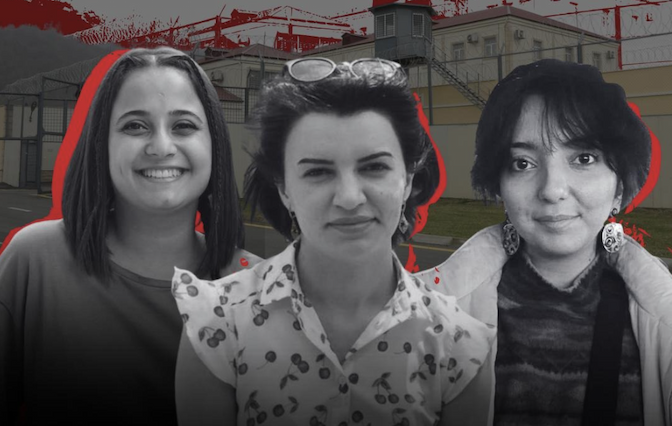
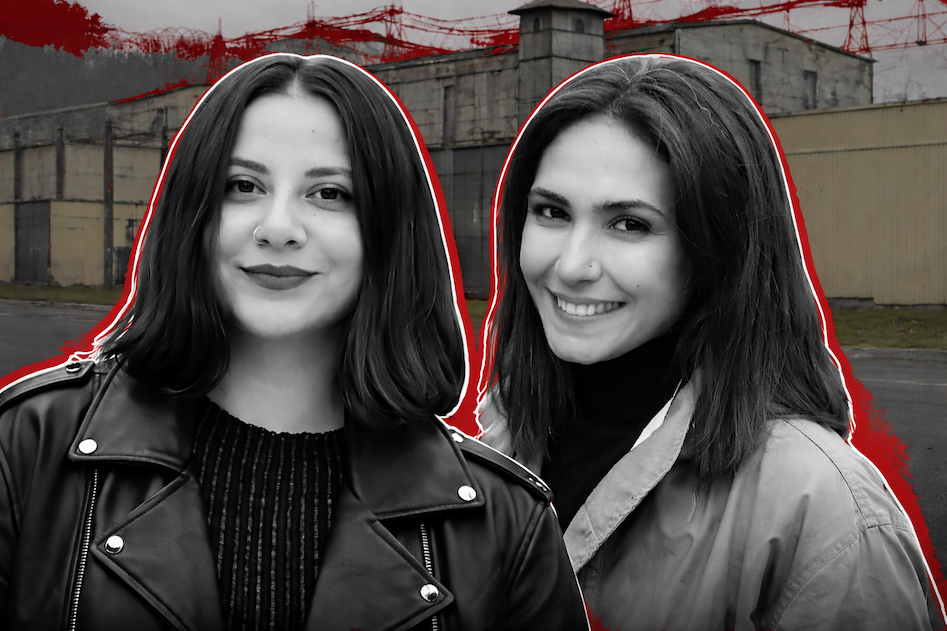
On 5 February, a coalition including Amnesty International, ARTICLE 19 Europe, Human Rights House Foundation, and OMCT issued a joint statement on sexual harassment allegations against journalists Aysel Umudova and Ulviyya Ali, calling for independent investigation and their immediate release.
On 9 February, eighteen political prisoners signed an open letter to the Trump Administration and US Congress, citing over 400 political prisoners in Azerbaijan. Signatories included Shamshad Agha, Ulviyya Ali, Nurlan Libre, and Bahruz Samadov.
On 10 February, the Political Prisoners’ Defence Committee appealed to US Vice President JD Vance during his Baku visit, warning that Azerbaijan’s political prisoner problem poses a risk to US–Azerbaijan relations. Vance arrived on 10 February following meetings in Yerevan the previous day.
|
|
|
|
Ulviyya Ali and Aysel Umudova
|
| |
“Vance should not cut deals with Ilham Aliyev. What matters is human rights.”
— Imran Aliyev, journalist, from the dock at his hearing, 10 February
|
|
|
06
|
Repression Beyond Azerbaijan’s Borders
|
|
|
On 12 February, Gultakin Hajibayli, a member of the National Council’s Coordination Board, was deported from Turkey to Azerbaijan overnight. She had been held in Istanbul since 29 November 2025 under Turkey’s G-82 national security code. Upon arrival she remained free with no charges filed, though her name appeared in government media’s coup-plot coverage.
On 12 February, the State Security Services issued in absentia arrest warrants for former Deputy PM Abbas Abbasov, APFP deputy chairman Fuad Gahramanli, and Azadliq editor Ganimat Zahid, all currently abroad. All three denied the charges.
|
| |
Note
On 13 February, nineteen Azerbaijani civil society representatives crossed the land border into Armenia for the first time since the Tavush–Gazakh delimitation agreement, to meet with counterparts.
|
|